
Ellis Resident Lookup Records
One person can appear in several Ellis record systems without each system meaning the same thing. The Ellis Central Appraisal District and Ellis County GIS are place clues, with an account, situs address, owner mailing relationship, legal description, and taxing context. The Ellis County Clerk's Acclaim index identifies a party in a recorded instrument. A voter record concerns registration and election geography. Court, vital, probate, license, and business records each have their own custodian and access limits. Use the Ellis source that matches the question, rather than merging every Ellis name hit into one profile.
| Record | What it can confirm | Ellis route | Access boundary |
|---|---|---|---|
| Appraisal account | Named owner and situs or mailing relationship | Ellis ECAD and Ellis County GIS | Public entry point; request existing records when a needed field is absent |
| Official record | Party role and legal land connection | Ellis County Clerk Acclaim | Guest index; image and copy rules can apply |
| Voter registration | Status, precinct, and election geography | Ellis registrar or Texas status route | Protected information is excluded or suppressed |
| Court docket | Party, cause number, court, and status | Ellis County or Ellis District Clerk, LGS, and municipal court | Sealed, juvenile, expunged, and confidential matters may not appear |
| Vital or probate file | Event or estate relationship lead | Ellis County Clerk, District Clerk, or DSHS | Copies and newer vital records have qualification rules |
| License or filing | Credential or documented entity affiliation | TDLR, SOSDirect, or Ellis County Clerk | State and local filing systems remain separate |
Start with an instrument number, case number, parcel account, VUID, or full name plus a known city. The Ellis County Clerk holds deeds, assumed names, probate, and guardianship; the Ellis District Clerk handles district-court files such as divorces and felonies. That division matters when an Ellis resident lookup finds a case name but not the file itself.
Note: An Ellis appraisal account can connect a person to a parcel, but it does not prove that person currently lives at the property.
Ellis Court Names and Dockets
For an Ellis court name search, first identify the court level. Ellis County Courts at Law, Justice Courts, and county probate records follow the Ellis County Clerk route, while district matters follow the Ellis District Clerk. The Ellis County court directory directs online court searching to LGS Online Solutions. The public field screen was not captured, so it is not safe to promise a specific name filter, date range, or document image. If an Ellis result is unclear, give the clerk the name, approximate year, court type, and cause number, then ask whether the file is online, archived, sealed, or available by written copy request.
The county's LGS court-search entry point is shown below. Record the court, cause number, style, party role, filing date, and disposition date rather than relying on a matching name alone.
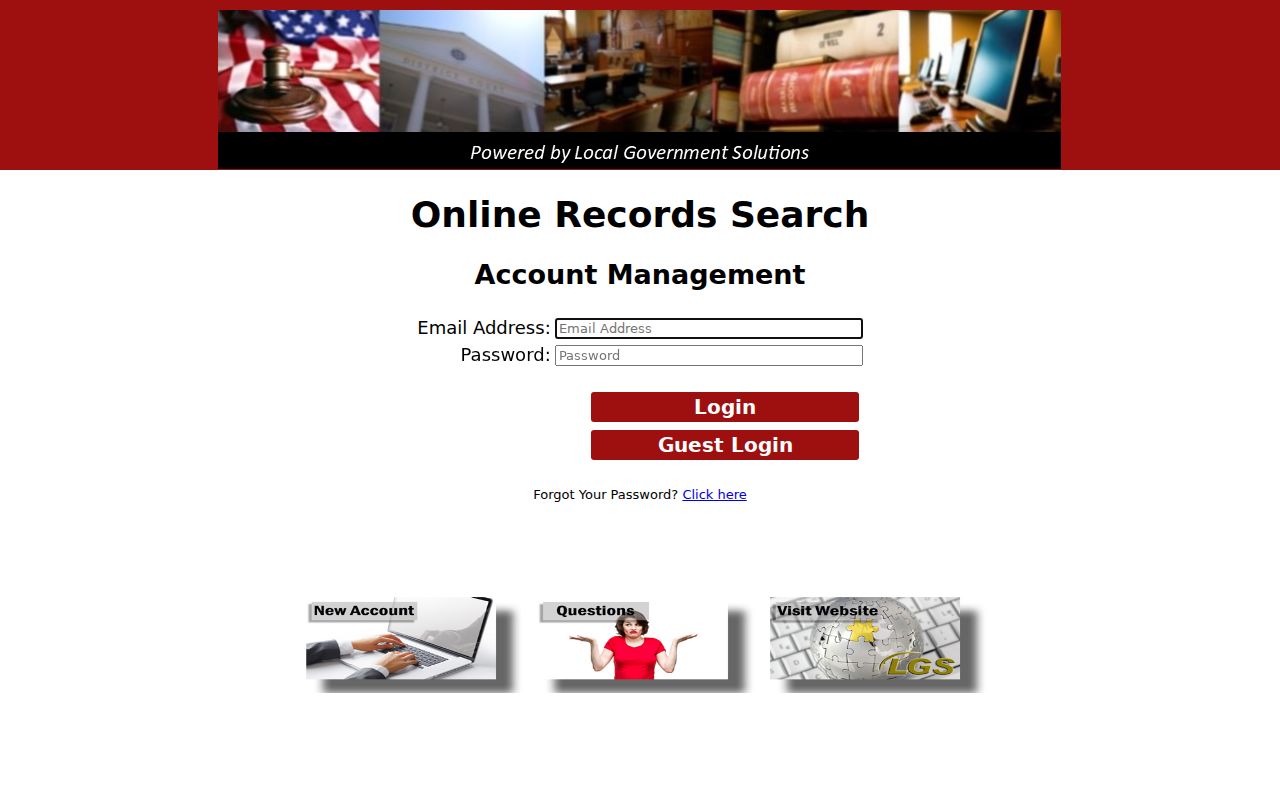
An Ellis court index is a lead to a docket or file. It is not a finding that two people with the same name are the same person. Preserve the result fields that make the match checkable:
- Court name and cause number
- Case style and party role
- Filing date and case type
- Status, disposition, or result date
- Document link or clerk-copy route, if shown
Ennis Municipal Court is separate from the Ellis County courts. Its municipal court page identifies traffic, city-ordinance, and listed municipal matters, and says online citations generally appear the next business day. Information for some matters is limited to the violator or a juvenile's parent or guardian. The court lists in-person, mail, online, and phone payment or plea routes, but a phone call is not an appearance.
The Ennis municipal court source is captured here for the local county-record route.
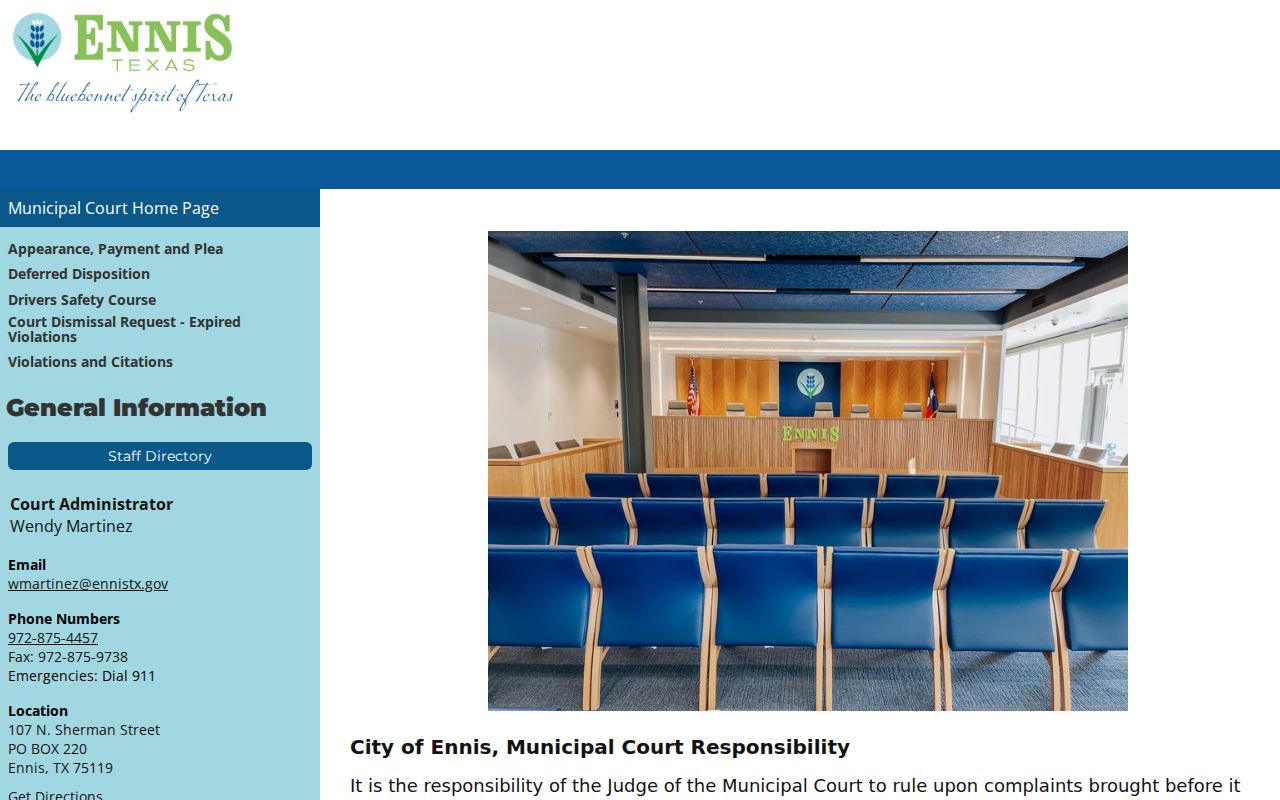
Use the municipal court for a city citation or ordinance matter, and use the county court directory for district, county, or justice-court questions.
Ellis Resident Lookup Same Names
Same-name errors are the central risk in a resident lookup. Compare two independent markers before treating a result as relevant: a middle initial, a parcel legal description, a case number, an event date, a court, or a known city. A deed party may be a trust, estate, business, or family member. A voter registration is not proof that the voter occupies the listed address today. An Ellis city directory is a dated publication snapshot. An Ellis jail, court, or state result also needs its own identifier and access date.
The Ellis County Sheriff's legacy inmate-roster redirect is a documented county route, but the current direct roster address and live fields were not exposed during research.
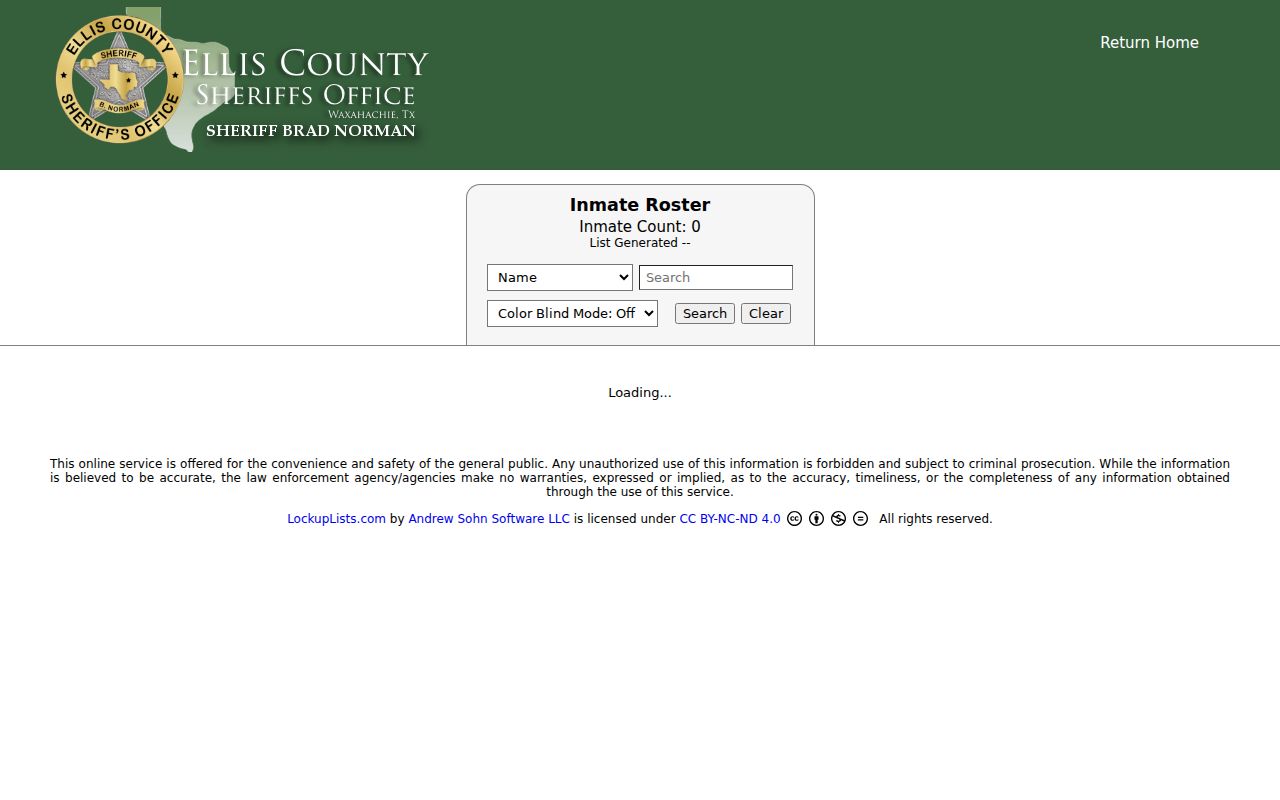
Call Ellis jail information at 972-825-4931 to confirm the current official route and whether a custody record is still current. Do not treat a past roster result as a current status.
The county identifies a Texas voter status route, although automated research received a 403 response from its live screen. The Texas voter lookup remains a status route, while the Ellis registrar handles local registration questions and public-list requests subject to Texas Election Code rules.
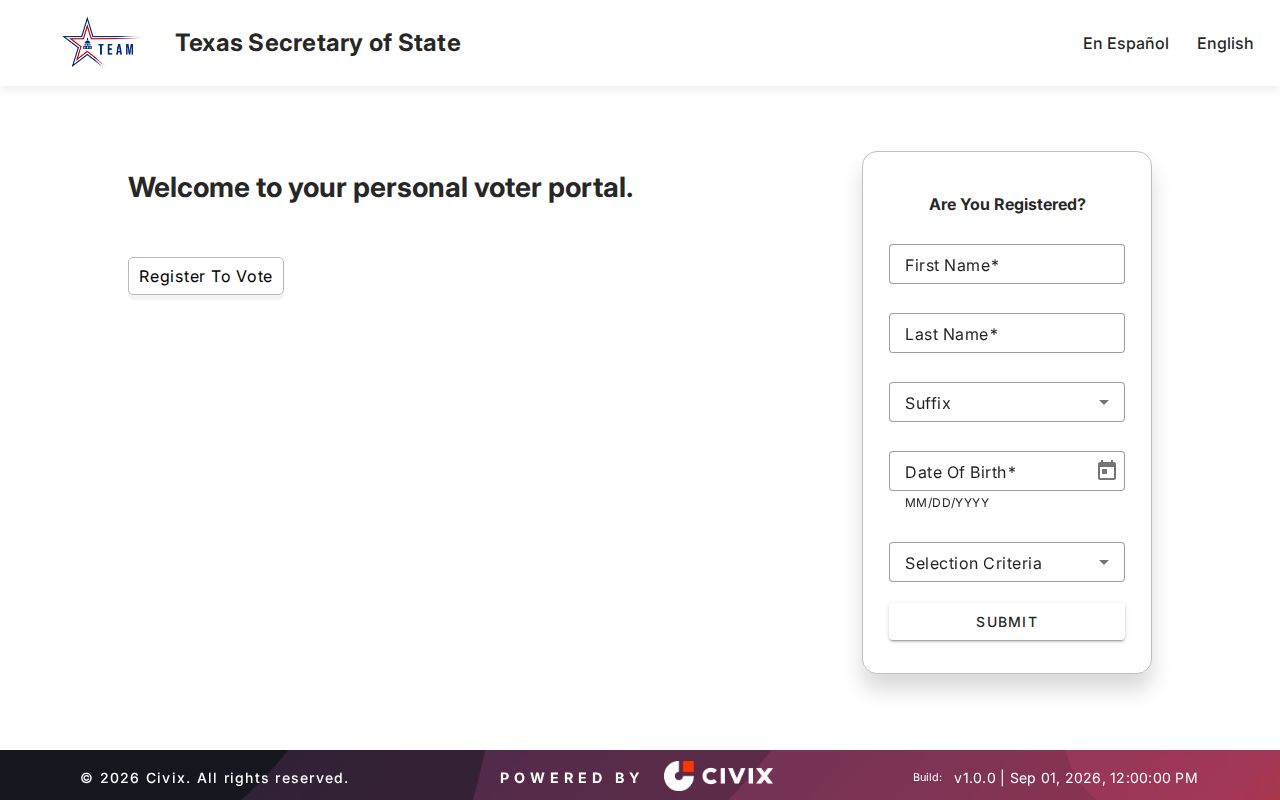
A voter record can show registration status and election geography. It should be retained with its date and never used as a general current-residence directory.
Verify an Ellis Resident Record
A careful Ellis resident lookup confirms place and time separately. For a recorded-property question, test a party name in Ellis Acclaim, then compare the legal description or instrument number with the Ellis ECAD account and Ellis County GIS context. For a court question, keep the court and cause number with the party role. For a historical address, compare a date-specific directory or newspaper item with a deed, tax roll, or map from the same period. Each record is evidence of its own event, not a blank check to infer present occupancy.
- Write down the full name, variant spelling, known city, and one strong identifier such as a case number, parcel account, or approximate event date.
- Search the relevant Ellis official index and preserve the search date, filters, no-match result, or returned instrument or cause number.
- Confirm the place twice by pairing a legal description with ECAD or GIS, or by pairing a dated directory address with a recorded or archival source.
- Confirm the time twice, then ask the custodian for the image, certified copy, or filing detail when the distinction affects the conclusion.
- Docket
- A court's running case record, usually showing the case number, parties, events, and status rather than every file document.
- Index and image
- An index points to a record. An image is the scanned or copied document that must be read for its actual wording and limits.
- Certified copy
- A custodian-issued copy with the certification required when an official copy, rather than a research lead, is needed.
Note: A no-match result can reflect spelling, date coverage, privacy, sealing, or a different custodian, not proof that no record exists.
Ellis Vital and Probate Trails
Vital and probate records can confirm relationships or event dates, but access depends on the record. The Ellis County Clerk says Ellis birth records reach back to 1850 and handles county marriage records and qualifying local birth and death copies. Texas DSHS provides statewide applications, verifications, indexes, and forms. Birth records become public after 75 years and death records after 25 years under Government Code §552.115; earlier records require the appropriate applicant status, legal authority, or documented direct and tangible interest. A DSHS verification is not the same thing as a certified county license or decree.
The Texas DSHS vital-application directory shows the official form routes used for birth, death, marriage, divorce, and amendment requests.
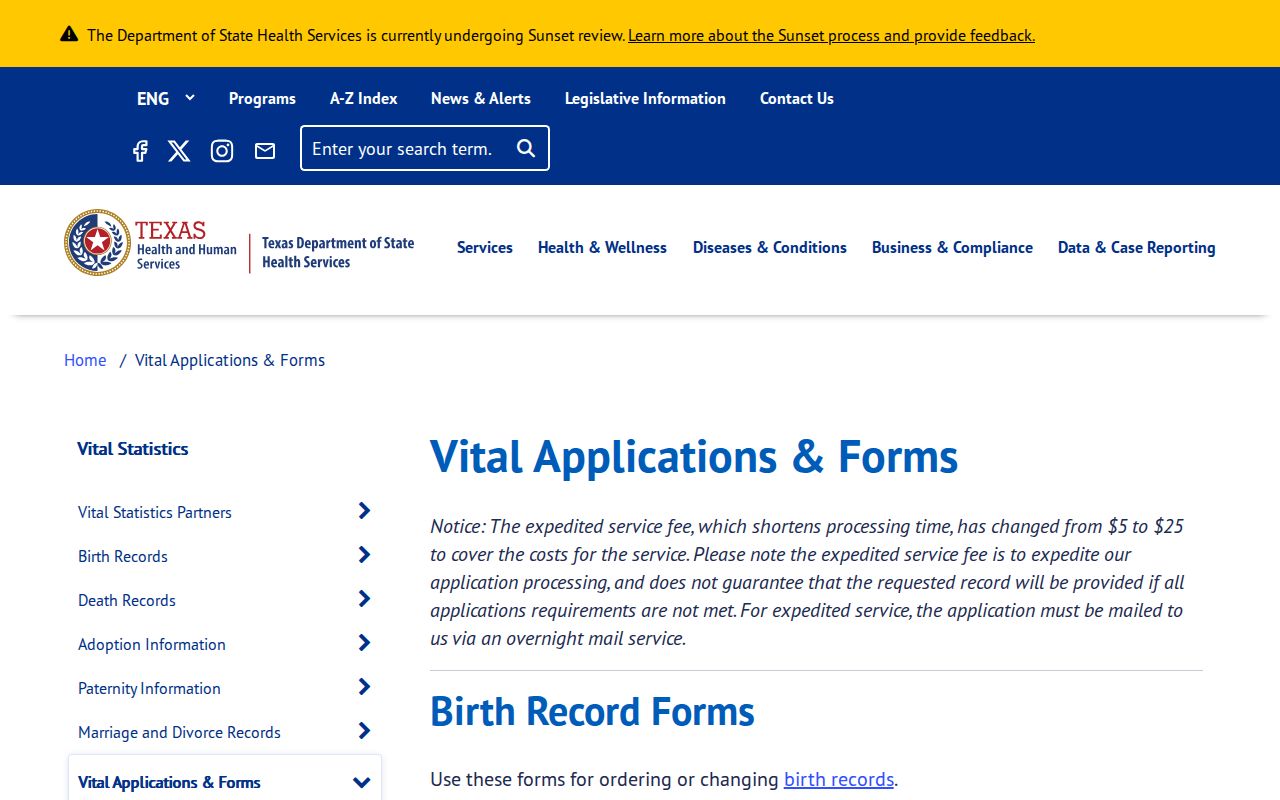
DSHS says most online orders process in 20 to 25 business days, while mail processing is generally longer. Check the current application and ID instructions before ordering.
For an heir question, begin with the Ellis County Clerk probate index and a recorded probate affidavit, then ask about the case file or certified copy. Older Ellis family-history leads can come from TSLAC reels, Sims Library, cemetery material, newspapers, or a compiled genealogy volume, but they need confirmation in the original county, church, cemetery, probate, or vital source.
Ellis Business Name Cross-Checks
A business name can help distinguish two Ellis residents when the underlying filing actually identifies the relevant person, date, or county. The local assumed-name certificate held by the Ellis County Clerk is different from a state entity filing. Texas SOSDirect is the state entity route and may require an account or charge for searches, copies, or images. Compare legal name, filing date, registered-office information, instrument, and status before connecting state and county records.
The Texas Department of Licensing and Regulation public search can use a licensee name, license type, city, or county without a login. Its public results generally show a license type, number, expiration date, and county. A license result confirms that agency record only. It does not establish an Ellis address, local practice, or current residence unless the record itself supplies that fact.
Note: Keep an assumed-name filing, state entity record, and license result as separate evidence until dates and identifiers support a connection.
Ellis Records Request Fallback
When a public screen ends, the next step is a narrow request to the office that made or keeps the record. The Ellis County public-information route follows the Texas Public Information Act request process under Government Code Chapter 552. State the record type, full name and variants, date range, address or legal description, and the format requested. A specific request lets the custodian identify responsive material and explain any fee, redaction, archive location, or statutory exception.
For court or probate material, ask the Ellis County Clerk or Ellis District Clerk whether the record is online, at a terminal, archived, restricted, or available by written copy request. For an address or map issue, Ellis County GIS accepts corrections and data requests. A clerk may confirm filing metadata that a public portal omits, but a request cannot bypass a sealed record, confidentiality program, login rule, or copy policy.
Ellis Historic Record Dates
Ellis records have deep dates, but their access is uneven. The Ellis County Clerk publishes local birth records reaching back to 1850, while the Texas State Library and Archives Commission identifies Ellis deed microfilm beginning in 1845. Those dates are useful leads, not a promise that every page is online or indexed. TSLAC describes direct and reverse deed indexes, original deed volumes, tax rolls, and probate series, and it cautions that some transcribed series may not be accurate.
That uneven history makes a source label important. A public index, a scanned image, a certified copy, and a compiled genealogy entry deserve different weight. Preserve a volume, reel, page, instrument, case, or certificate number with the result so the next Ellis search starts from a checkable reference rather than a copied name.
Limits on Ellis Resident Lookup
Texas confidentiality rules can remove or limit an expected Ellis result. The Texas Attorney General's Address Confidentiality Program supplies an eligible participant with a substitute mailing address, and protected voter programs can suppress or replace residence details. Social Security numbers, driver-license numbers, and personal-identification-card numbers are confidential in voter records. Do not attempt to rebuild a protected address from a parcel, directory, newspaper, or another source. Sensitive numbers in Ellis recorded documents should be raised with the Ellis County Clerk for the applicable redaction or correction route.
Texas privacy rights for covered private-sector controllers do not erase county, court, voter, vital, or archive records. Ask the actual custodian about confidentiality, correction, or redaction. For an immediate safety concern, use the official Address Confidentiality Program or local law-enforcement route rather than a name search.